

.svg)
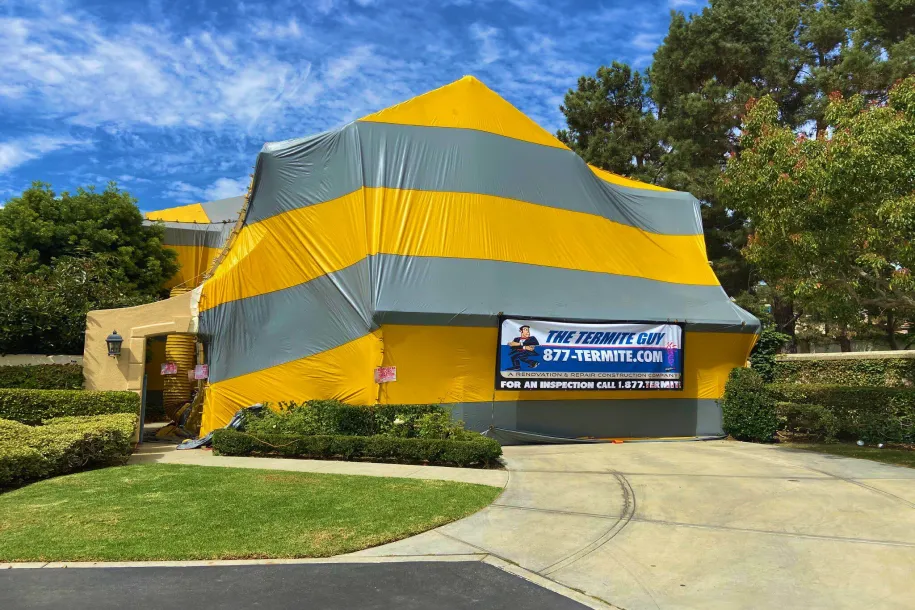
If you’re a homeowner or business owner in Orange County or Los Angeles County, the threat of termites is never far from mind. If you’ve discovered signs of termites, you’re likely weighing your options: is full-home fumigation (“tenting”) necessary, or can a local, no-tent treatment solve the problem?
Here’s the bottom line: Termite damage can progress undetected inside wood, even when the surface looks fine. That’s why fumigation is the gold standard for complete, whole-structure termite elimination. The California Structural Pest Control Board clearly states that local and spot treatments do not guarantee whole-house eradication and any company claiming otherwise is engaging in false advertising.
Don’t risk hidden damage or recurring infestations. Understanding the differences between fumigation and local treatments will help you make the best decision for your home’s long-term safety.
Understanding Termite Infestations in Southern California
.webp)
Drywood vs. Subterranean Termites: Why Species Matters
Southern California sees two common types of termites, and each requires a different strategy. Accurate identification shapes the treatment plan and helps set realistic expectations.
- Drywood termites live inside wood and can spread into hidden areas throughout a structure. Their colonies are often scattered, which makes isolated spot work unreliable for whole-home control. The UC ANR Statewide IPM Program explains the key differences in behavior and treatment.
- Subterranean termites nest in soil and enter from below or around the perimeter. Treatments frequently focus on soil, foundation, and accessible wood where activity is predictable.
A licensed inspection is essential to confirm species, locate activity, and determine the right scope of work.
Fumigation (Tenting): The Gold Standard for Whole-House Eradication
What Is Fumigation?
Fumigation, commonly known as “tenting,” involves sealing your home with a large tent and filling it with a fumigant gas (usually sulfuryl fluoride). This gas penetrates all wood and structural voids, killing termites and other pests at every life stage. The process typically takes 3 days, during which residents must vacate the property. Following aeration, the fumigant leaves no residue or harmful substances in the house. For regulatory details on structural fumigation in California, see the California Department of Pesticide Regulation and the Structural Pest Control Board.
.webp)
Best use cases
- Widespread or hidden drywood termite infestations, including inaccessible areas.
- Multi-unit buildings and historic homes with extensive woodwork.
- Escrow or real estate transactions that require certified whole-structure clearance.
Advantages
- Whole-structure reach, including walls, attics, and beams, without locating every colony.
- Typically a single service to eliminate an established drywood infestation.
- Also controls certain other pests present during treatment.
- No residue left on surfaces after aeration.
For information on the active ingredient used in many structural fumigations, review EPA guidance on sulfuryl fluoride.
Local Treatment: Targeted and Convenient
What Is Local Treatment?
Local treatment, sometimes called “no-tent” or “spot” treatment, involves applying termiticides, foams, or direct-injection products to specific, identified infestation sites. For subterranean termites, this may include perimeter soil treatments. The process is less disruptive, and residents can often remain at home during service.
When Is Local Treatment Appropriate?
Local treatment is best suited for:
- Small, localized, or early-stage infestations where termite activity is visible and accessible.
- Subterranean termite infestations, which are often addressed with targeted soil or wood treatments.
It’s important to note that California’s Department of Pesticide Regulation does not approve local treatments as a substitute for whole-house fumigation in drywood termite cases. Spot treatments are not legal alternatives when full eradication is required.
See official guidance on local treatment limitations.
Limitations of Local Treatment
While local treatments offer convenience, they have notable limitations:
- Limited reach: Only effective in areas where termites are detected and accessible. Hidden colonies may survive and continue causing damage.
- Not suitable for large infestations: Cannot guarantee whole-house eradication, especially for drywood termites.
- May require multiple visits: Ongoing maintenance and follow-up treatments may be necessary.
- Risk of missed colonies: If all infested areas aren’t found, termites can persist and spread.
California regulators do not accept local treatments as a whole-structure alternative for drywood termites when complete eradication is required. The Structural Pest Control Board provides consumer guidance on treatment limitations and escrow clearance standards.
Fumigation vs. Local Treatment: Quick Comparison
Next Steps if You Suspect Termites In Your Home
Always Start with a Professional Inspection
The most important step is a thorough inspection by a licensed pest control professional. Only a trained expert can accurately identify the termite species, assess the extent of the infestation, and recommend the most effective and compliant treatment plan for your property.
Protect Your Home With The Termite Guy
The Termite Guy serves Orange County and Los Angeles County with honest, science-first recommendations. Our team has over 25 years of termite fumigation experience with an industry leading 5 year warranty. We also have licensed construction teams to handle wood repairs.
Schedule your inspection or call The Termite Guy for fast help with termites today.

.svg)
